When you click on a review, a bonus offer or a game guide, you are often being routed through an affiliate partnership. The partnership means the operator pays a commission if you sign up or deposit. Because the commission can influence the tone of the content, regulators and consumer‑rights groups require sites to flag such relationships clearly. Transparent disclosure lets you separate genuine editorial advice from paid promotion, helping you make informed decisions about where to play.
What affiliate disclosure means for players
A clear disclosure tells you that a piece of content has a commercial tie‑in. It does not automatically mean the information is unreliable, but it signals that the author may have received a financial benefit. For players, this knowledge reduces the risk of being misled by overly positive language that hides a commission motive. It also gives you the chance to compare the same offer across multiple sources, ensuring you are not locked into a single operator just because of a hidden incentive.
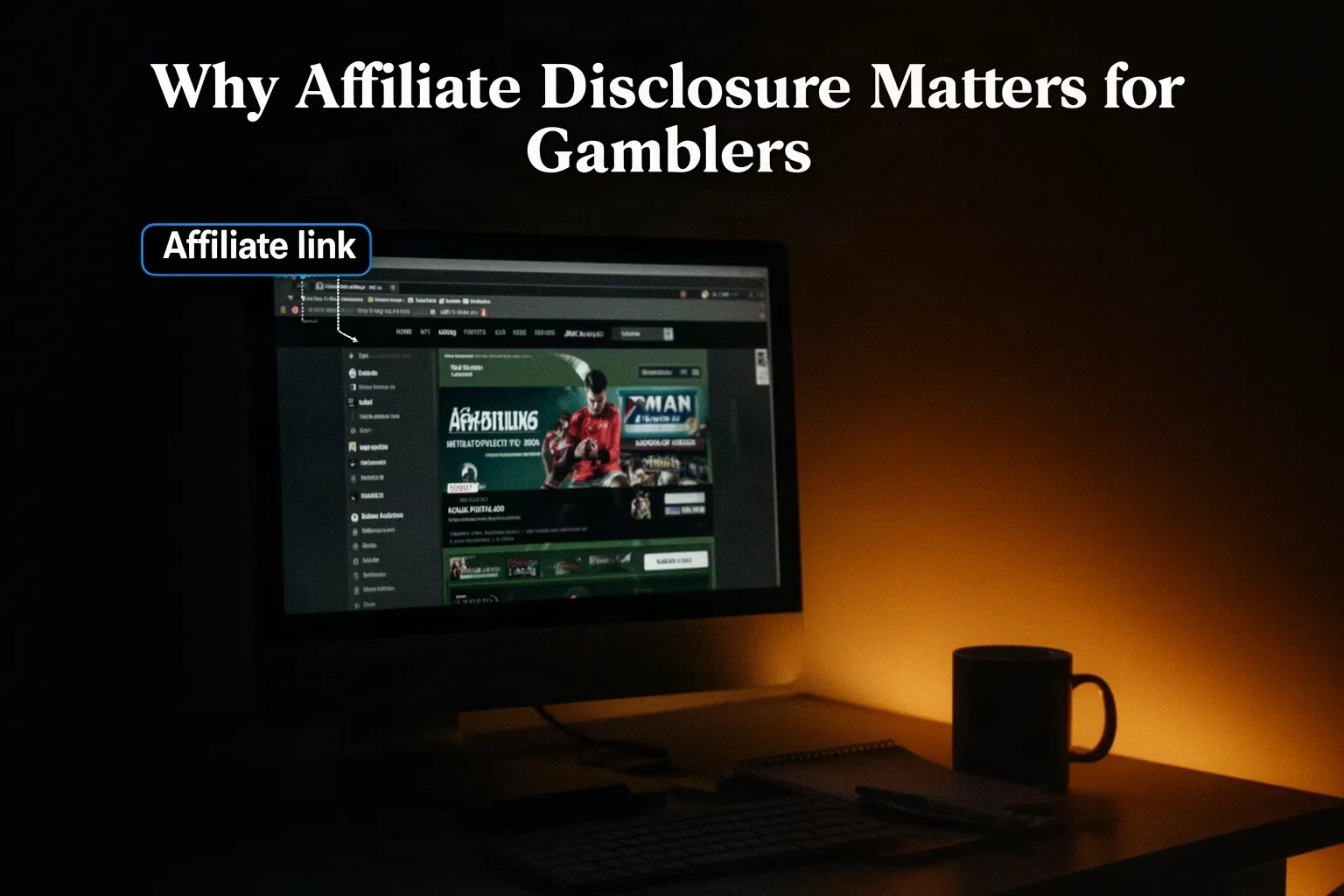
In practice, a good disclosure appears at the top of an article, next to a logo, or as a short note beneath a promotional banner. The language should be simple – for example, "We may receive a commission if you click this link" – and it should be visible without having to scroll far. When sites follow this practice, players can quickly assess whether the advice aligns with their own research, fostering a healthier, more competitive market.
Legal status of affiliate marketing around the world
There is no single global regulator for gambling affiliates, but many jurisdictions have introduced specific rules. In the United Kingdom, the UK Gambling Commission (UKGC) treats affiliate marketing as a form of advertising and enforces the Advertising Standards Authority (ASA) code. Denmark’s Gambling Authority similarly requires clear labelling and imposes stiff penalties for non‑compliance. Across the European Union, the E‑gaming Commission encourages member states to adopt audit‑ready tracking systems, meaning affiliates must keep records that can be inspected by regulators.
Outside Europe, countries such as Canada, Australia and several Caribbean licences also expect transparency, often embedding disclosure requirements within broader advertising legislation. While the specifics differ – some jurisdictions mandate a written disclaimer, others accept a visual icon – the overall trend is toward explicit, consumer‑focused disclosure. Operators that ignore these expectations risk fines, loss of licence, or being barred from advertising in the affected market.
Key regulators and their disclosure rules
The UKGC is perhaps the most active in policing affiliate behaviour. It can issue enforcement notices, levy fines up to £100,000 and even suspend an operator’s licence if affiliate content is deemed misleading. The regulator also expects affiliates to use a unique tracking identifier for each campaign, making it possible to audit the flow of commissions. Failure to provide a clear disclosure can trigger an investigation by the ASA, which may order the removal of the offending material.
In Denmark, the Gambling Authority focuses heavily on anti‑money‑laundering (AML) compliance. Affiliates must verify that the operators they promote are themselves AML‑certified and must keep records of all promotional material for at least five years. The authority also requires a conspicuous disclaimer on every page that contains affiliate links, and it monitors social‑media influencers for compliance as part of its broader AML strategy.
The broader EU framework, while not a single regulator, encourages each member state to adopt the General Data Protection Regulation (GDPR)‑compatible tracking approach. This means affiliates need to obtain consent for cookies that track clicks and must provide a clear privacy notice alongside the affiliate disclaimer. Many EU countries, such as Spain and Italy, have added their own advertising codes that echo the UKGC’s expectations, making a uniform approach more achievable for cross‑border operators.
Minimum age requirements for gambling affiliates
Age thresholds vary, but the most common minimum is 18 years. The UK, Spain, Italy and most EU members set the gambling age at 18, meaning any affiliate content directed at younger audiences is prohibited. Denmark, Sweden and Norway also use 18 as the baseline, but a few Canadian provinces – such as Quebec – require players to be at least 19. Affiliates must ensure that their landing pages include age‑gate checks where legislation demands it, and they must not market to under‑age audiences through social media or influencer channels.
When an affiliate operates across multiple jurisdictions, it must adopt the strictest age rule that applies to any of its target markets. This prevents accidental breaches, such as promoting a UK‑licensed operator to a 19‑year‑old audience in Canada without proper verification. Failure to enforce age limits can lead to licence revocation for the operator and civil liability for the affiliate.
Licensed operators and affiliate compliance
A reputable affiliate only works with operators that hold a valid gambling licence from a recognised authority – for example, the UKGC, Malta Gaming Authority (MGA), Danish Gambling Authority or the Curaçao eGaming licence. Trade bodies such as the Remote Affiliate Industry Group (RAIG) have created a code of conduct that outlines best practices for disclosure, data handling and responsible‑gaming promotion. Membership in RAIG is not mandatory, but many reputable affiliates display the badge as a signal of compliance.
Operators themselves are required to monitor the affiliates that promote them. This includes regular audits of traffic sources, checking that each affiliate’s website complies with the relevant jurisdiction’s advertising standards, and ensuring that the affiliate’s disclaimer matches the operator’s own responsible‑gaming messaging. If an operator discovers an affiliate breaching the rules, it can terminate the partnership and may report the breach to the relevant regulator.
Tax considerations for affiliate earnings
Affiliate earnings are treated as taxable income in most jurisdictions. In the UK, affiliates must declare commission income on their Self Assessment tax return and may be liable for Income Tax and National Insurance contributions. In the United States, earnings are reported on a Schedule C and subject to federal and state taxes, as well as self‑employment tax. Canada’s provinces require affiliates to report commission income on their personal tax returns, with the Canada Revenue Agency (CRA) handling both federal and provincial taxes.
While the exact rates differ, the common principle is that affiliates cannot treat commission income as a hobby; it is a business activity. Many affiliates keep detailed records of invoices, payments received and expenses incurred, which helps when filing taxes and when regulators request audit‑ready documentation. If you are unsure of the tax obligations in your jurisdiction, seeking advice from a qualified accountant is recommended.
Responsible‑gambling resources linked to affiliate content
Every reputable affiliate must display easy access to responsible‑gambling help. In the UK, the standard resources include BeGambleAware, GamCare and Gamblers Anonymous. A typical disclaimer will read: "If you think you may have a gambling problem, please visit BeGambleAware, GamCare or Gamblers Anonymous for support." These links should appear near the affiliate disclaimer, preferably on the same page footer, ensuring that players can find help without having to search.
In other jurisdictions, similar organisations exist – for instance, the Australian Responsible Gambling Council or the Canadian Problem Gambling Institute. Affiliates should replace the UK‑specific names with the appropriate local bodies when targeting those markets, but the principle remains the same: provide a clear pathway to assistance. Failure to include these resources can be considered a breach of responsible‑gaming policy by many regulators.
Frequently asked questions
- "How can I tell if an article is an affiliate promotion?" Look for a disclosure statement at the top or bottom of the page. The wording should mention a commission or partnership.
- "What should I do if I suspect an affiliate is not disclosing properly?" Report the concern to the site’s support team, and if the issue persists, contact the relevant regulator – for example, the UKGC or the Danish Gambling Authority.
- "Are influencers required to disclose affiliate links?" Yes. Influencers who promote gambling operators are subject to the same advertising standards as any other affiliate and must use clear visual cues and text disclosures.
- "Do age‑gate checks protect me from under‑age gambling?" Age‑gate checks are a legal requirement in many jurisdictions, but they rely on self‑declaration. Players should also use parental controls on devices to add an extra layer of protection.
- "Can an affiliate earn money without a licence?" Affiliates themselves do not need a gambling licence, but they must only promote operators that hold a valid licence. Working with unlicensed operators is a breach of most regulators’ codes.
- "Is it legal for an affiliate to operate from a different country than the operator?" Cross‑border affiliate activity is allowed if both the affiliate and the operator comply with the regulations of each market they target, including disclosure, age limits and tax obligations.
For more background on how we evaluate and rate gambling content, see How we rate and our methodology. Stay up‑to‑date with changes in regulation by checking the Latest industry news. If you want to explore further guidance, browse our Related articles and guides on marketing compliance and player protection.
Play responsibly (18+ or 19+ depending on jurisdiction)
If you or someone you know has a gambling problem, please seek help from BeGambleAware, GamCare or Gamblers Anonymous. Gambling should always be enjoyed responsibly.